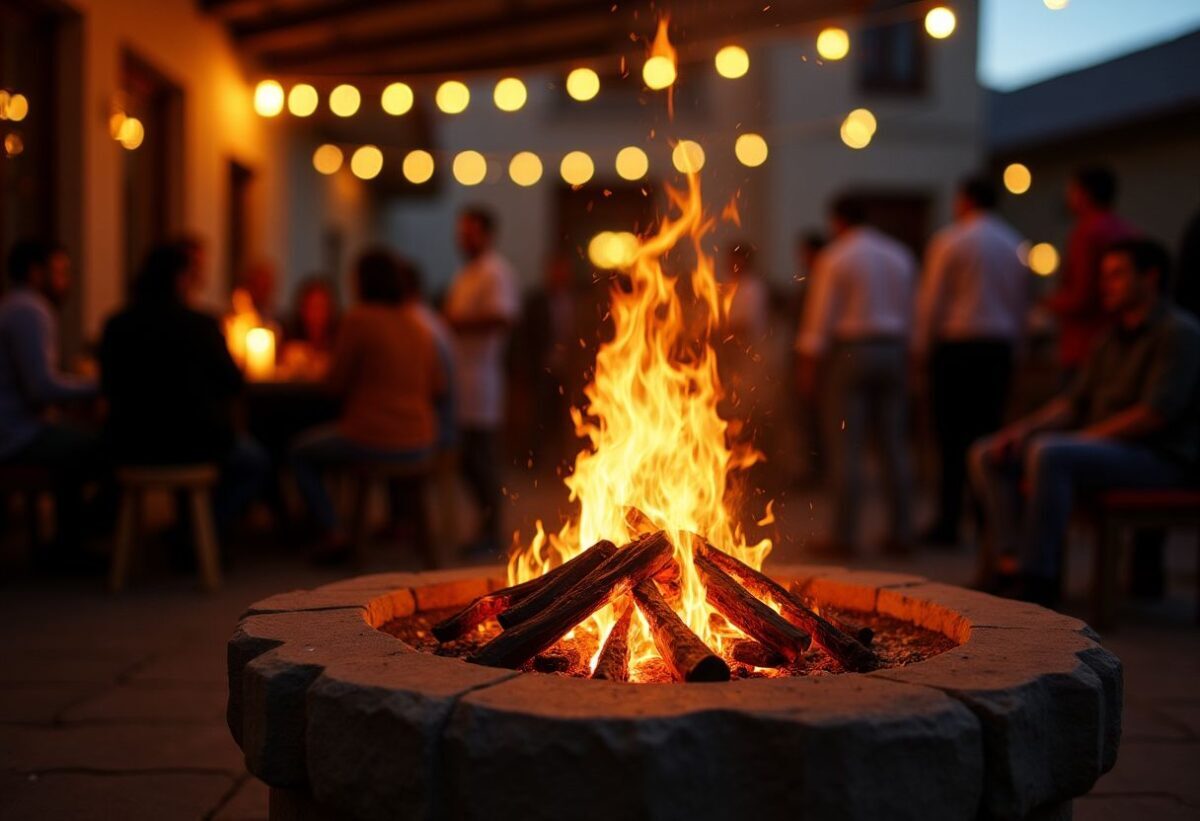
The fascinating world of words often hides mysteries that we do not suspect. Among them, the term “brasero” raises many questions. Why, among so many possible lexical choices, did we adopt this name for the convivial object that warms our outdoor evenings? The history of the word “brasero” is rooted in diverse linguistic origins and rich cultural traditions. By exploring its etymology, its journey through time and space, as well as its role in our modern habits, we will discover how a simple fire container has become a symbol of warmth and conviviality.
Etymological Origins of the Word “brasero”
The etymology of the word “brasero” reveals a captivating journey through languages and cultures. The roots of this term take us to the heart of linguistic history.
The word “brasero” comes from Spanish, where it designates a container holding embers. In Spanish, “braza” means ember, from which the term “brasero” is directly derived. This word then crossed linguistic borders to become entrenched in the French vocabulary. The constant exchanges between Hispanic and European cultures facilitated this adoption.
In other Romance languages, similar terms exist, highlighting the importance of the object in Mediterranean societies. For example, in Italian, it is referred to as “braciere.” These linguistic parallels show how deeply the “brasero” is rooted in the traditions of the region. The etymology illustrates not only linguistic evolution but also the cultural significance of this heating object.
The Traditional and Cultural Use of the Brasero
Beyond its name, the function of the brasero is closely linked to millennia-old cultural practices. The object is much more than a simple heating device. It symbolizes a tradition of sharing and conviviality.
- In Mediterranean cultures, the brasero was often used to heat homes during the coldest months, creating a central point around which the family gathered.
- In Latin America, the brasero served both as a source of heat and a means of cooking. It is common to see families preparing meals together around the embers.
- The plancha brasero also symbolizes the adaptation and evolution of this object over the centuries, adapting to modern lifestyles while retaining its traditional essence.
These uses demonstrate how this object has united people over time, transcending geographical and cultural boundaries.
The Brasero in the Modern World
Today, the brasero has managed to reinvent itself to meet contemporary needs while preserving its historical heritage. Its evolution testifies to its ability to combine tradition and modernity.
In our gardens and on our terraces, the brasero has become an essential element of outdoor moments. It brings warmth and ambiance, transforming summer evenings into memorable moments. Many contemporary designs incorporate modern materials such as stainless steel and ceramics, offering varied aesthetic options to harmonize with current decoration styles.
Outdoor events also benefit from the presence of braseros, which add a touch of charm and authenticity. Restaurateurs and event organizers use these devices to create warm and welcoming atmospheres.
The enthusiasm for the brasero reflects a return to simplicity and authenticity, values cherished in our society in search of meaning and human connection.
Despite modernization, the brasero retains its original function of gathering. This duality between old and new reflects our desire to preserve traditions while embracing innovation.