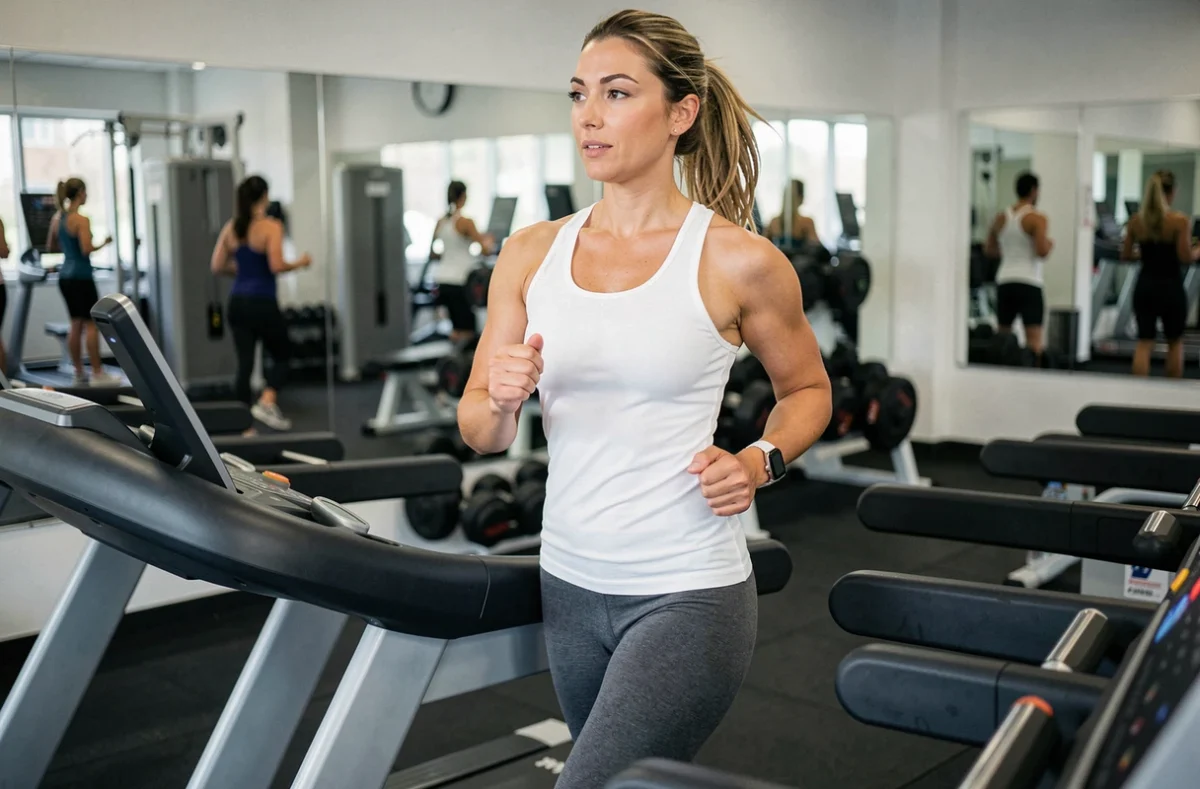
Choosing between a treadmill and an elliptical trainer for weight loss often comes down to comparing the calories burned per workout. Studies comparing the two machines have not shown that either one is consistently better for losing body fat. The real factor that determines results over several months is weekly activity volume and consistency, rather than the type of machine.
Calories burned per workout: treadmill vs. elliptical trainer
| Criteria | Treadmill | Elliptical trainer |
|---|---|---|
| Main muscles worked | Quadriceps, hamstrings, calves, glutes | Quadriceps, hamstrings, glutes, pectorals, back muscles, biceps, triceps (using the moving handles) |
| Joint impact | High (each stride creates an impact with the ground) | Low (smooth movement without impact) |
| Upper-body engagement | Low (natural arm swing) | Moderate to high (pushing and pulling the handles) |
| Incline option | Yes (simulates walking uphill) | Varies by model |
| Beginner-friendly | Can be used for walking at a low speed | Guided movement, quick to get used to |
At the same perceived effort, a treadmill tends to show a slightly higher calorie burn because you support your body weight with every stride and your feet impact the ground. The elliptical makes up for this with simultaneous upper- and lower-body engagement, distributing the effort and potentially allowing for longer workouts.
One often-overlooked point: a high energy expenditure during a workout does not guarantee greater fat loss over time. If the machine that burns the most calories per minute leaves you so exhausted that you cut back to two workouts a week, the real benefit quickly diminishes. This detailed comparison of treadmills vs. elliptical trainers for weight loss helps explain the difference between raw calorie burn and tangible results.
Joint impact and consistency: the factor comparisons overlook
Most comparisons focus on calories. A more useful question is: which machine can you use three to five times a week without pain for several months?
On a treadmill, every stride sends a shock wave from the ground up through your ankles, knees, and hips. For someone who is overweight or has joint problems, this mechanical stress can cause pain, leading to less frequent workouts and eventually stopping altogether.
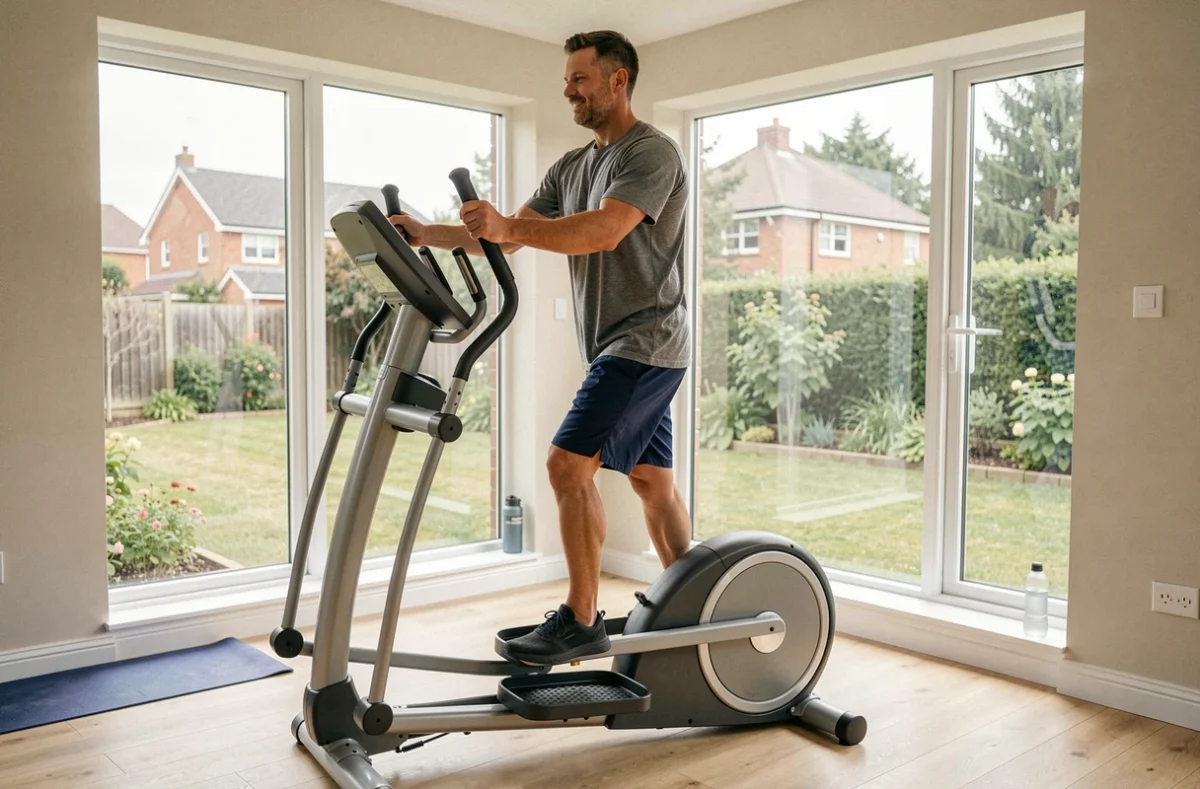
The elliptical eliminates this impact with a continuous gliding motion. A biomechanical study of 15 men measured lower impact-related forces on the elliptical than during walking. The same study also found greater engagement of the hip flexors and knee extensors. “Low impact” does not mean “no strain”: muscles and tendons are still loaded, just in a different way.
French guidelines for people who are overweight or obese emphasize personalized progression in physical activity, tailored to individual abilities, without favoring one machine over another. The principle is the same for everyone: the right machine is the one you can use consistently.
Weekly activity volume: what really matters for weight loss
The WHO recommends that adults get 150 to 300 minutes of moderate-intensity activity per week, or 75 to 150 minutes of vigorous-intensity activity, or a combination of the two. The guidelines also state that all activity counts and that it is beneficial to limit sedentary time.
Applied to the choice between a treadmill and an elliptical trainer, this changes the perspective. The question is no longer “which one burns 50 more calories in 30 minutes?” but “which one helps me reach this weekly volume without getting bored or injured?”
- If you enjoy the feel of walking or running and your joints can handle it, a treadmill offers a natural movement pattern and a gradual increase in intensity through incline settings.
- If you want a smooth, low-impact movement that also engages your arms and back, an elliptical trainer allows for longer workouts with less localized fatigue in the knees.
- If you have the space and budget, alternating between the two machines reduces monotony and varies the muscles worked, helping you stick with the program over the long term.
Sustainable weight loss: making exercise equipment part of a broader strategy
No cardio machine, however effective, can by itself make up for an unbalanced diet or a sedentary lifestyle outside your workouts. Sustainable weight loss relies on several pillars working together.
Strength training alongside cardio
Adding two strength-training sessions a week (squats, planks, push-ups) increases lean muscle mass. More developed muscles use more energy at rest, supporting the calorie deficit created by cardio.
Daily activity outside your workouts
Walking for short trips, taking the stairs, gardening: these non-exercise activities account for a significant share of total energy expenditure. Thirty minutes on a treadmill cannot make up for eight hours of sitting still.
Eating habits that suit your needs
Adjusting your food intake remains the most direct way to influence your energy balance. Without resorting to a restrictive diet, matching your intake to your actual needs amplifies the effects of every cardio workout, whether on a treadmill or an elliptical.
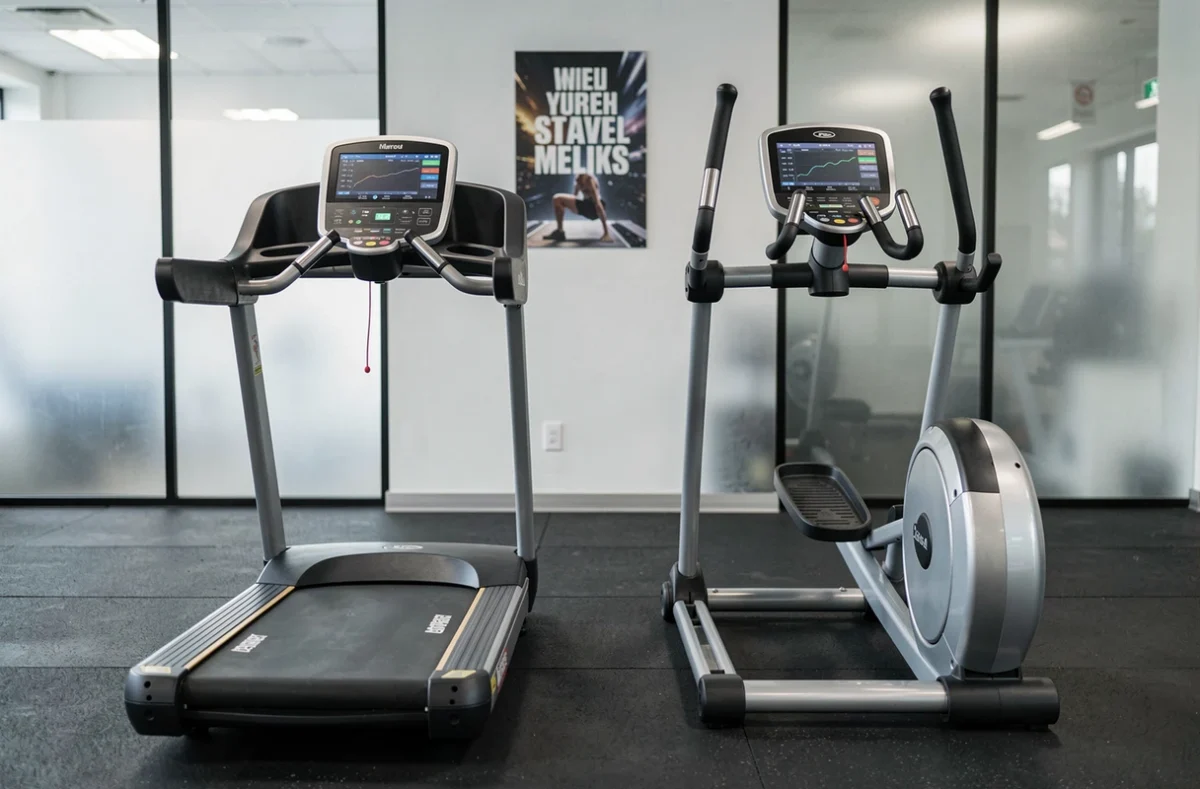
The choice between a treadmill and an elliptical trainer depends less on the machine itself than on your ability to use it regularly, without pain, over the long term. The best investment is the one you use several times a week, combined with strength training and a diet that aligns with your goals.