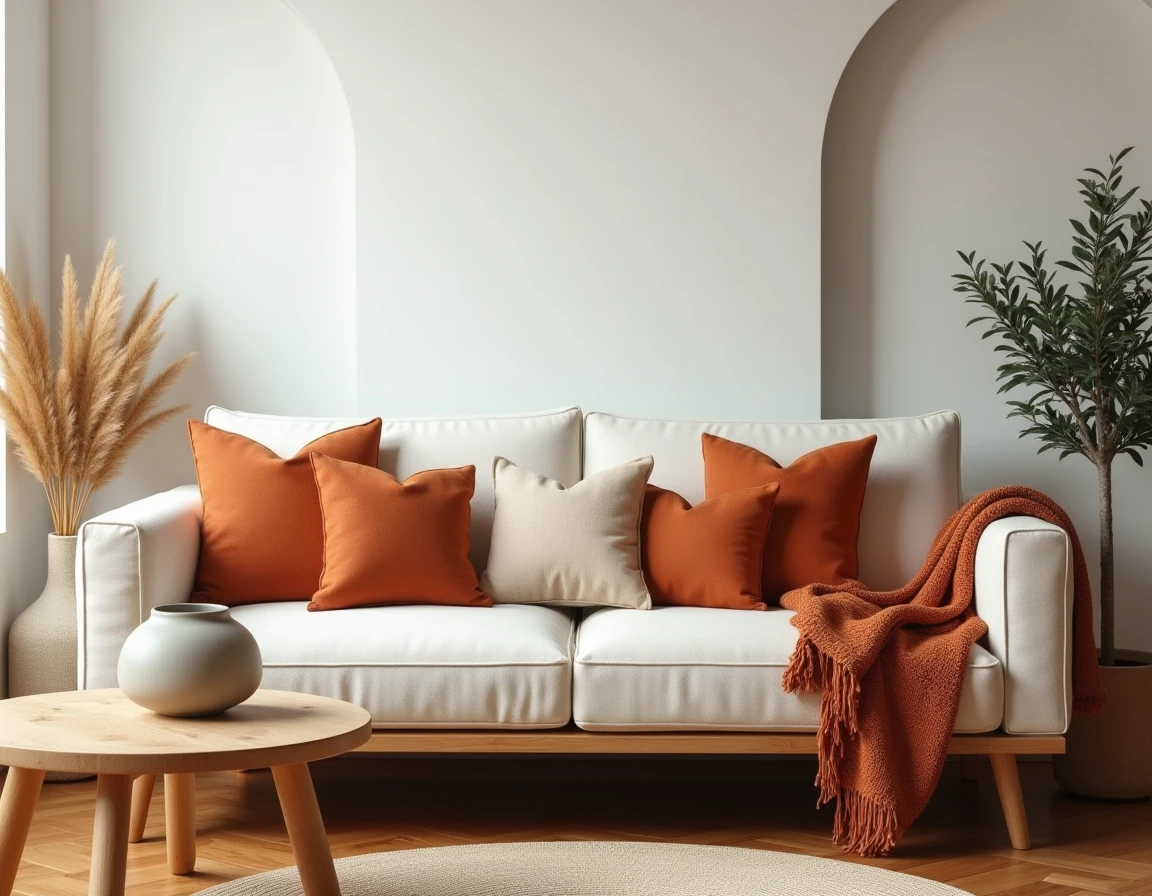
Cold minimalism has had its time. Very white, smooth, and minimally furnished interiors are giving way to spaces richer in textures, personal objects, and deep hues. This shift requires rethinking the hierarchy of materials, the layering of light sources, and the role of furniture in the composition of a room.
Layering Materials: Building Warmth Through Successive Layers
A warm interior does not rely on a single dominant material. We recommend working in layers: a mineral or wooden base (floor, walls), an intermediate textile layer (curtains, rugs, throws), and a tactile surface finish (cushions, ceramics, brass or stoneware objects).
The guiding principle is the contrast of density. Pairing washed linen with corduroy on the same sofa creates a visual tension that captures the eye. Placing a raw jute rug on an oiled hardwood floor generates a noticeable difference in texture both to the touch and to the eye.
Each layer must provide a texture that the previous one does not have. If two elements in the same layer have the same texture, one of them is redundant. This is a compositional reflex that we systematically apply in interior architecture.
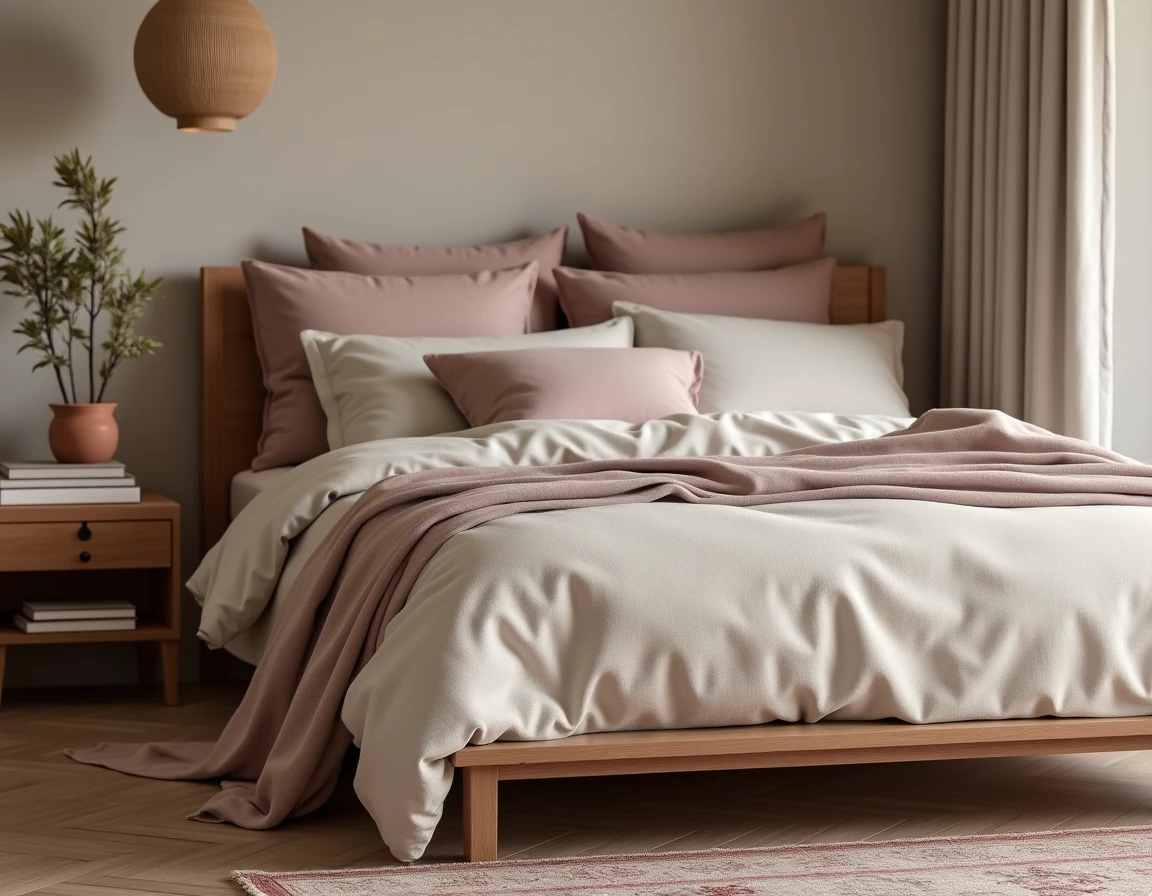
Enveloping shades like terracotta, taupe, rosewood, or blue-gray fit naturally into this layering logic. They act as chromatic binders between very different materials, where pure white would isolate each texture. Specialized resources like perspectivemaison.com allow exploration of these associations in real situations, with setups by room and style.
Sculptural Lighting and Color Temperature: Beyond Simple Fixtures
Lighting has become a central element of style, not a functional accessory that is addressed last. Oversized pendants, wall sconces with organic shapes, and sculptural floor lamps now serve as focal points in the composition of a living room or bedroom.
The technical rule to follow: multiply light sources at different heights. A single ceiling light flattens the volumes and eliminates the shadows that give depth to a space. We recommend at least three sources per main room.
- A high source (pendant or ceiling light) for general lighting, ideally with a dimmer, between 2,700 and 3,000 kelvins for a warm ambiance
- An intermediate source (wall sconces or console lamp) that sculpts the walls and highlights textures
- A low source (floor lamp, table lamp, placed garland) that creates intimate pockets of light at seating level
The color temperature makes all the difference. Above 4,000 kelvins, the light turns bluish and kills the cocooning effect. Staying below 3,000 kelvins in living spaces is the guideline we consistently provide.
Multifunctional Furniture and Asymmetrical Living Room Composition
The rise of multifunctional spaces redefines the role of each piece of furniture. A living room is no longer just a relaxation area: it absorbs the office, the library, sometimes the dining room. The furniture must respond to this versatility without turning the room into a furniture showroom.
The symmetrical composition (sofa facing the television, coffee table in the center) remains the most common reflex. It is also the most static. An asymmetrical arrangement energizes the space and creates natural flows. Shifting the sofa a few degrees away from the wall, placing an armchair diagonally, freeing up a corner for a sculptural floor lamp: these adjustments radically change the perception of volume.
We observe that vintage pieces and curved shapes are making a strong comeback in this soft minimalism logic. An armchair with rounded lines breaks the rigidity of a rectangular TV unit. An accent table made of turned wood introduces a welcome irregularity next to a straight sofa.
The Trap of “Too Matched”
Buying the entire set of sofa, coffee table, and TV unit from the same collection creates a catalog effect that eliminates all personality. Mixing eras and origins (a thrifted console, a contemporary light fixture, a handmade rug) generates coherence through contrast, much more vibrant than harmony through uniformity.
Plants and Living Elements: Dosage and Strategic Placement
The “return of the living” does not mean piling up green plants on every available surface. Placement matters more than quantity. A large architectural plant (ficus lyrata, strelitzia) positioned in a dead corner has more impact than a dozen small pots scattered on shelves.
Plants play a role of vertical transition in the composition of a room. They fill the space between the furniture (located under one meter high) and the ceiling, an often-neglected area that contributes to the feeling of emptiness or coldness.
- In a corner of the room, a tall plant breaks the geometry of the walls and softens the edges
- On an open shelf, a trailing plant creates movement and masks less aesthetic storage areas
- Near a natural light source, plants draw the eye towards the window and amplify the perception of brightness
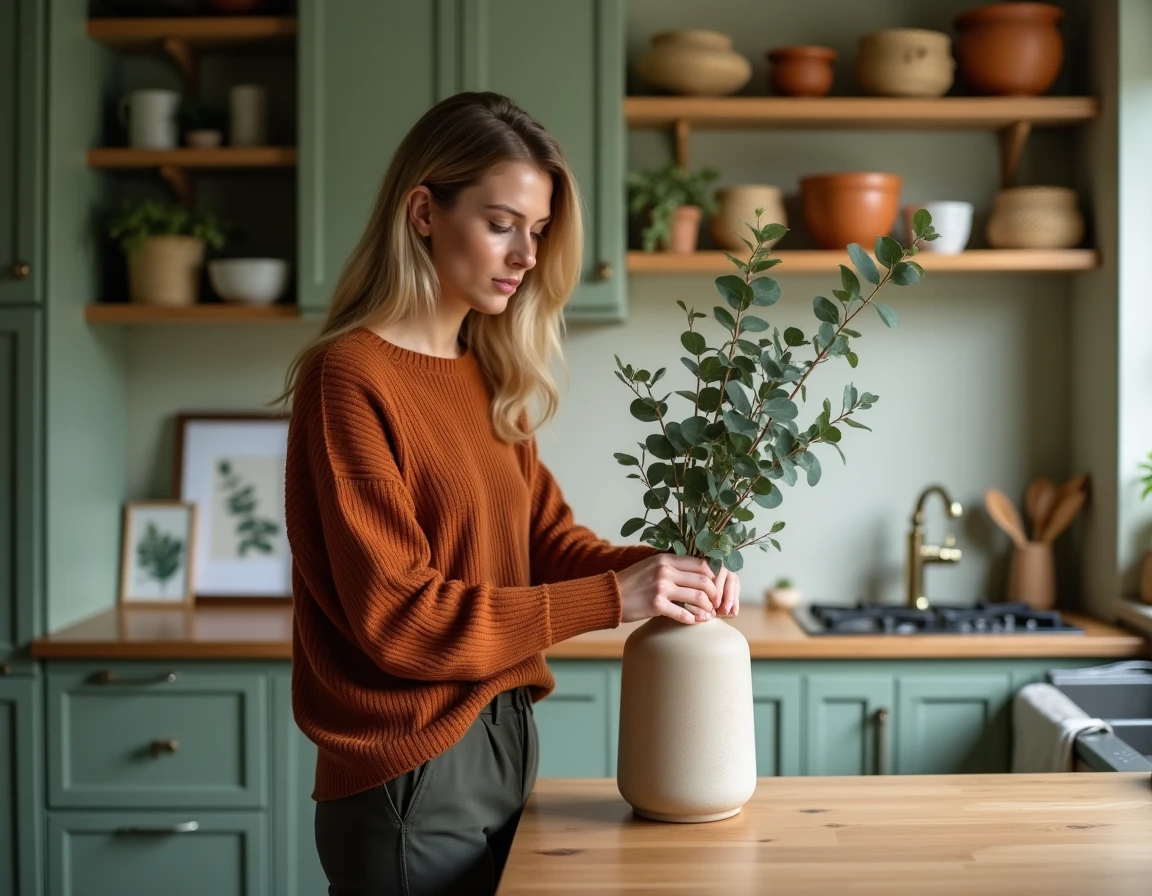
Plant pots contribute to the layering of materials. A raw terracotta pot on a lacquered piece of furniture, a wicker cache-pot on a stone ledge: each support enhances the sought-after tactile contrast.
Creating a trendy and warm interior relies less on purchases than on choices of placement, contrast, and dosage. Well-layered lighting, an asymmetrical furniture composition, and a few living elements placed with intention transform a room without requiring major renovations.