
Transporting a rigid kayak on the roof of a small car without roof bars is the kind of problem that drives most casual paddlers towards inflatables. An inflatable kayak fits in a backpack or a car trunk, inflates in a few minutes, and allows you to launch in spots where a rigid kayak wouldn’t make it.
The next step is to choose the right model, because the quality differences between two inflatable kayaks at the same price can sometimes be considerable.
Longitudinal rigidity and drop-stitch technology: what really makes the difference
The first instinct when comparing inflatable kayaks is to look at the weight and the number of seats. Often, we overlook the most decisive criterion: the rigidity of the hull once inflated.
A simple PVC kayak, with traditional air chambers, remains flexible under load. On a calm lake, that’s fine. As soon as you face a lateral current or some chop, the hull bends in the center and the kayak becomes difficult to steer. In 2022, the DGCCRF even reported a recall of certain IKON inflatable kayaks specifically for a risk of hull bending that could lead to a loss of control.
Thousands of threads connect the two sides of the fabric in drop-stitch technology, allowing for inflation to a significantly higher pressure than a traditional inflatable. The result: a rigid floor, smoother gliding, and a performance that approaches that of an entry-level rigid kayak.
For regular outings or trips lasting several hours, a model equipped with a drop-stitch floor is recommended over a soft floor. The resources available on kayak-gonflable.net allow you to compare models based on this technical criterion, among others.
Inflatable kayak at sea: regulatory constraints to check before buying
Paddling along the Breton coast or exploring a cove in an inflatable kayak is tempting. Before diving in, there is a regulatory framework to be aware of.
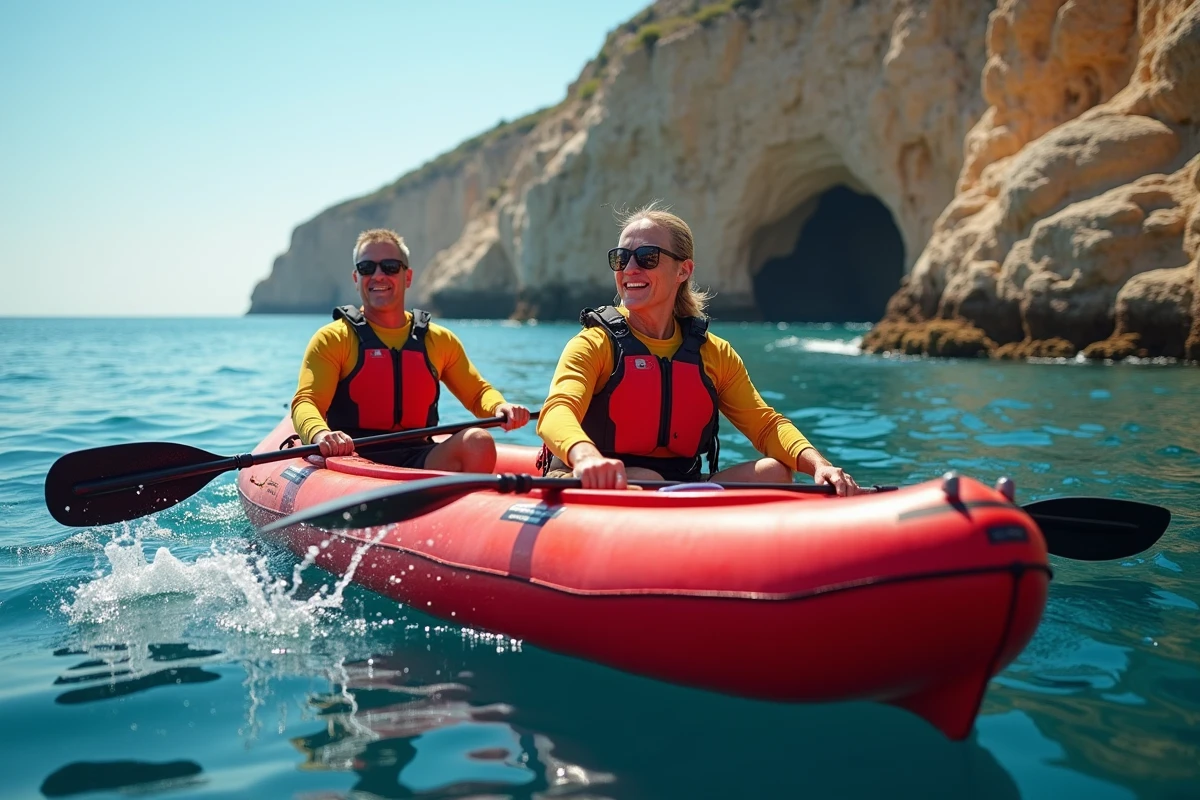
In France, to navigate up to two nautical miles from a shelter (division 240 of Maritime Affairs), the kayak must meet several requirements:
- A minimum length defined by regulations, varying according to the intended category of navigation.
- Several independent inflatable compartments to ensure residual buoyancy in case of a puncture of one chamber.
- A complete safety equipment (life jacket, luminous locating device, towing device) with the exact list depending on the distance from the coast.
An inflatable kayak with a single chamber, even if sturdy, will not pass a sea inspection. If you aim for coastal use, check that the model has at least two separate chambers and is approved for maritime navigation. Feedback on this point varies according to harbormasters, but inspections do exist, as do fines.
Inflation pressure and heat: a common trap by the sea
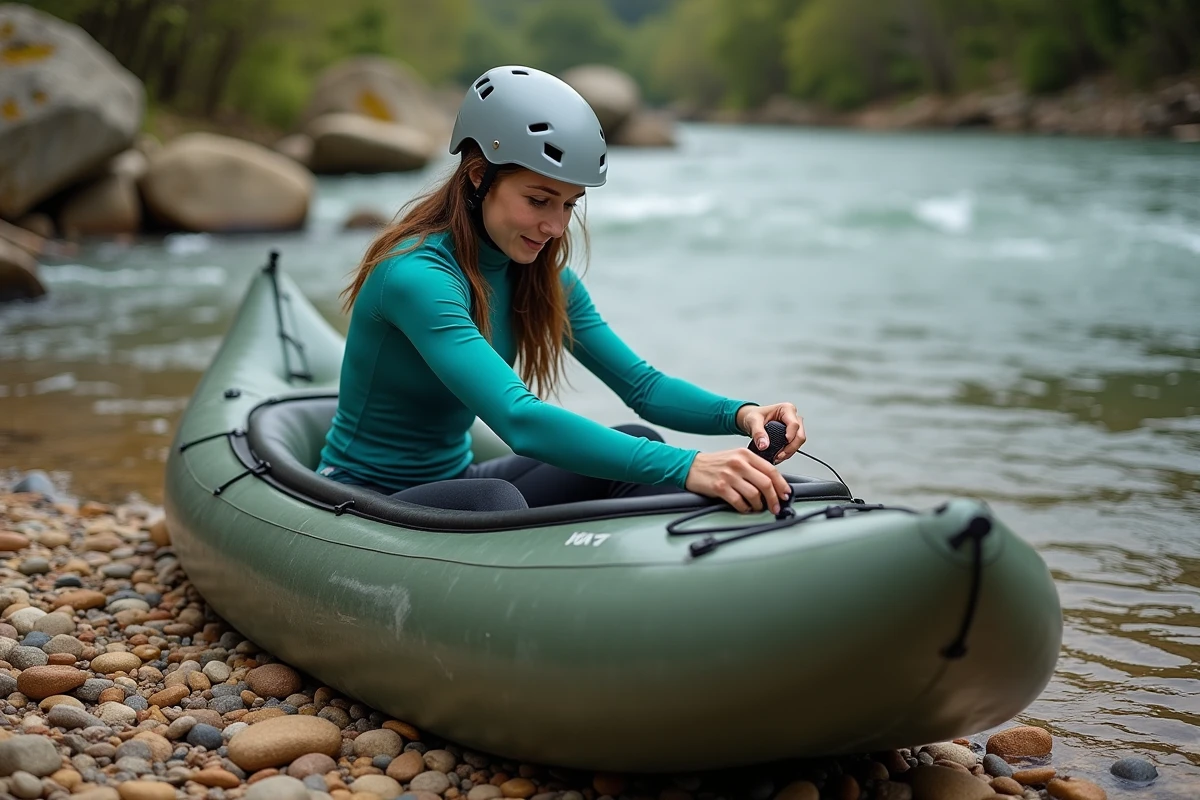
An inflatable kayak inflated to the correct pressure in the morning can reach overpressure by early afternoon under direct sunlight. On drop-stitch models made of PVC or TPU, overpressure in the sun can damage seams and valves. It becomes a habit to slightly deflate before leaving the kayak on the beach, and to check the pressure before heading out again.
Single or double: a choice that conditions everything else
The classic instinct is to take a double “just in case.” In practice, this logic has a direct cost on the enjoyment of paddling.
A double inflatable kayak weighs significantly more than a single. Inflated, it is also longer and less maneuverable in narrow passages. When used alone, you find yourself sitting at the back of a craft whose front floats too high, which exposes you more to the wind. A well-sized single offers better sensations than a double used solo.
The double is justified when paddling systematically with two people, or when bringing a child along. For mixed use (sometimes alone, sometimes in a duo), some manufacturers offer convertible models with a removable seat. This is a fair compromise, provided the total weight remains manageable for one person during transport.
Recycled PVC materials and field maintenance: what extends lifespan
In recent years, several brands (Itiwit at Decathlon, Advanced Elements) have integrated partially recycled PVC or TPU into their inflatable kayaks. The environmental intention is commendable, but in practice, these materials require the same precautions as classic PVC: rinsing with fresh water after each outing at sea, complete drying before storage, and storing away from heat.
The fragile points on an inflatable kayak are not the walls, but the valves and thermally welded seams. A grain of sand stuck in a valve is enough to create a slow leak.
We rinse the open valves under a stream of water after each session, and check the seams once a season by inflating the kayak and leaving it overnight: if the pressure has dropped by the next morning, there is a micro-leak to locate.
Repair kit: what you really need inside
Most kayaks come with a basic repair kit (patches, glue). For a multi-day outing or navigation in isolated areas, we supplement with:
- Repair tape like Tear-Aid, which holds even on a damp surface for quick fixes.
- A set of spare valve caps, as this is the component most exposed to impacts.
- A compact double-action manual pump, independent of the main pump, for reinflation in case of gradual pressure loss.
An electric inflator is convenient at the start, but a manual pump remains the only reliable option far from a power outlet.
Choosing an inflatable kayak starts with identifying its main playground (lake, river, sea), then checking the rigidity of the floor, the number of chambers, and regulatory compatibility. The rest (color, rod holder, deck net) is a matter of comfort. A well-chosen model based on these three criteria will serve for years without disappointing.