Landscaping, building a garden, or installing a new path often requires compacted and well-leveled soil. Not everyone has a compactor to do this job. Fortunately, there are other effective and accessible ways to compact the soil without using this tool. Whether you are a landscaping professional looking for alternatives or a gardening enthusiast wanting to save money, these five simple tips will help you achieve compacted soil, perfect for your outdoor landscaping needs. From natural methods to homemade solutions, discover how to compact the soil effectively.
Prepare the soil for optimal results
When it comes to compacting the soil, it is possible to use alternative tools that are often at hand. One of these tools is the rake. By using the flat side of the rake, you can apply downward pressure to gradually compact the soil. You can also use a wooden or rubber tamper to compact the soil in small areas.
Another option is to use a heavy and sturdy board. Place it on the area you want to compact and walk on it several times to apply sufficient pressure to effectively compact the soil.
If you have a wheelbarrow or cart, fill it with heavy materials like stones or sand and make back-and-forth movements across your yard to achieve a compacting effect.
Don’t forget that there are also portable vibrating plates available for rent at some specialty stores. These machines are specifically designed for soil compaction without requiring a bulky roller.
Using these alternative tools will allow you to effectively compact your soil without resorting to an expensive or hard-to-access roller.
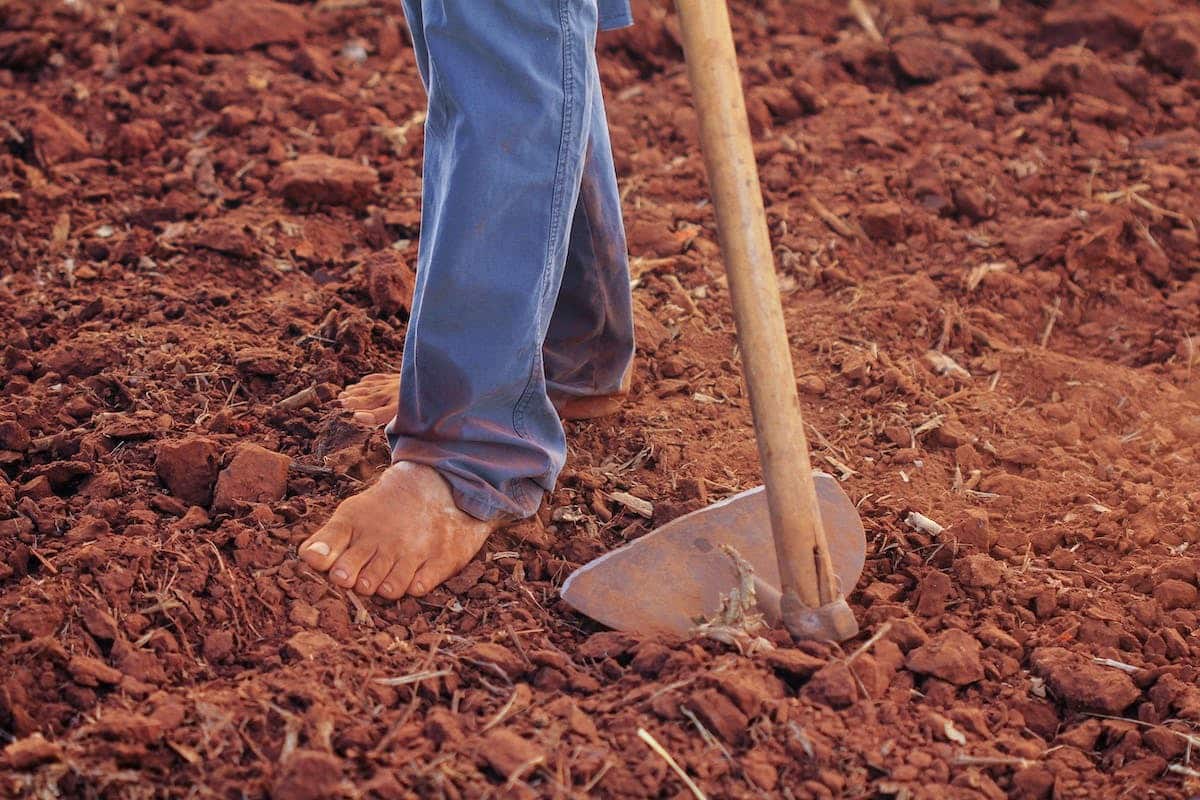
Alternative tools: another way to do it
When you want to compact the soil without using a roller, there are various manual techniques that can be used effectively. Among these methods, we can mention tamping. This technique involves using a wooden or metal tamper to compact the soil through repeated up-and-down movements. The weight of the tamper combined with these movements allows for uniform compression of the soil.
Another commonly used method is treading. This simply involves walking on the surface to be compacted with regular and firmly pressed steps. This exerts constant pressure on the ground, thus promoting its gradual compaction.
If you have a larger area to treat, you can opt for cyclic compaction. This technique involves using a portable vibrating plate or even a lightweight jackhammer. By applying these tools over the entire area, the vibrations produced contribute to soil compaction.
It is also possible to resort to layered backfilling, which involves adding successive layers of materials like sand or finely graded gravel. Each layer must be well compacted before adding a new one, thus creating optimal compression.
Let’s not forget that certain types of plants can also help in this process naturally. The roots of plants exert pressure on the soil, thus promoting its compaction. Just choose plants suitable for your terrain.
Compacting the soil without a roller is entirely possible thanks to the various manual techniques available. Whether through tamping, treading, cyclic compaction, layered backfilling, or the use of appropriate plants, there are simple and effective solutions to achieve well-compacted soil.
Manually compact: techniques that work
To achieve even more effective soil compaction without using a roller, here are some additional tips to consider. It is recommended to use appropriate mechanical equipment such as a vibrating plate or a light compactor. These tools allow for significant pressure to be applied to the soil, ensuring optimal compaction.
Another technique is to perform cross passes during compaction. By making diagonal movements rather than linear ones, this promotes a uniform distribution of pressure applied to the soil. This method guarantees a more homogeneous result and avoids uncompact areas.
You should consider the moisture of the soil during the compaction process. Indeed, to achieve the best results, it is preferable for the soil to be slightly moist but not soaked. An adequate moisture level will facilitate mechanical action and promote the closeness of particles to each other.
It may be wise to use a natural binder such as bentonite to improve soil cohesion. Bentonite is known for its ability to absorb water and form a gel that acts as a natural cement in the soil. This enhances its stability and facilitates compaction.
You should note that some types of soils are more conducive to compaction than others. Clays are often considered the easiest soils to compact due to their sticky nature. Sands, on the other hand, may require the use of specific techniques for optimal results.
If you want to compact the soil without using a roller, there are various additional tips that can be implemented to ensure effective compaction. Whether by using appropriate mechanical equipment, performing cross passes, or considering the moisture level of the soil, these tips will help achieve a perfectly compacted surface ready to be used in various construction or landscaping projects.
Tips for effective compaction: practical advice
To perfect the compaction of the soil without resorting to a roller, you must pay attention to prior preparation. Before starting work, make sure to remove all existing obstacles such as stones or roots using a shovel or appropriate equipment. Don’t hesitate to perform a light excavation to achieve a flat and even surface.
Another tip that can be useful is to use sand-filled tires to compact the soil. These tires act as weights and allow for uniform pressure to be applied across the entire surface. Simply place them side by side on the ground and roll them gently in different directions to achieve optimal results.
The use of a mechanical tamper can also be considered during soil compaction. This tool helps eliminate trapped air between particles through the vibrations it generates. It promotes soil densification and ensures its stability.
Pay great attention to natural drying after compacting. It is recommended not to use the compacted area immediately but rather to wait a few days, or even weeks depending on weather conditions, for the soil to fully stabilize.
These additional tips offer interesting alternatives for compacting the soil without resorting to a roller. Initial preparation, the use of sand-filled tires, the employment of a mechanical tamper, and natural drying are all methods that allow for effective and durable soil compaction. Don’t hesitate to put them into practice during your future projects to optimize your results.