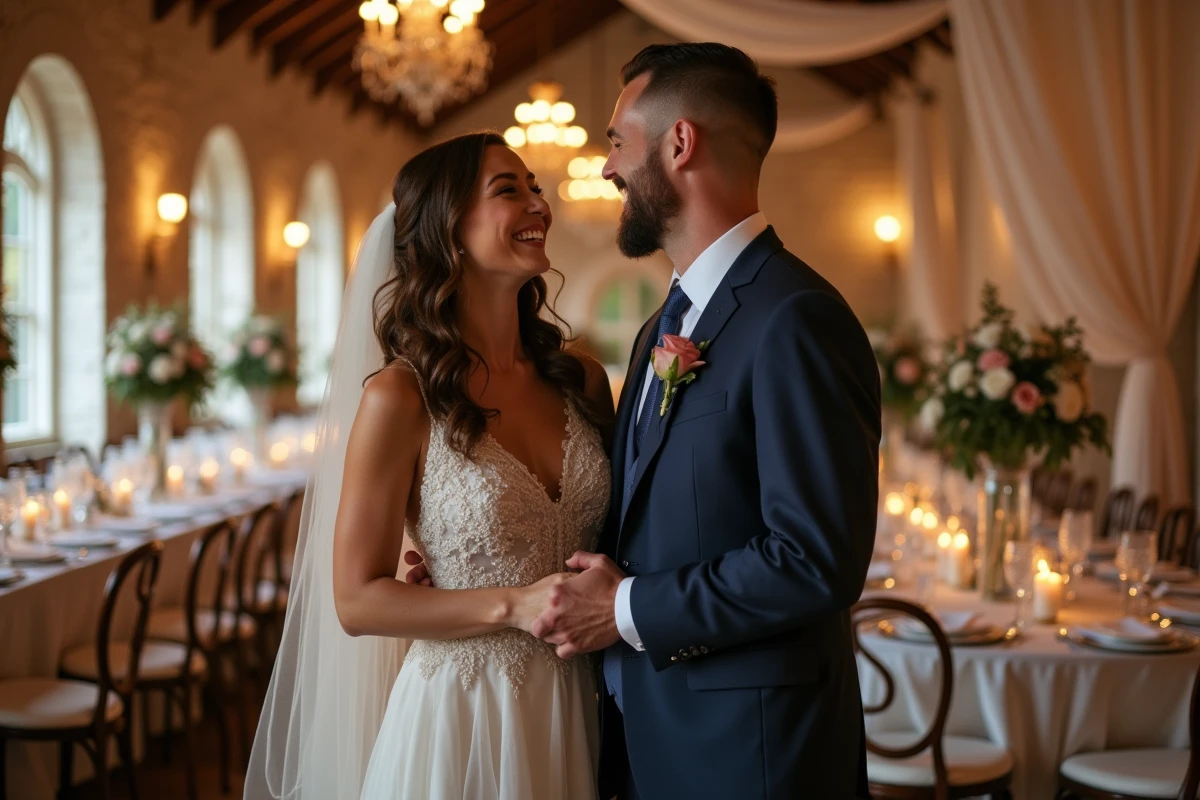
Organizing an unforgettable wedding means making decisions on dozens of items in just a few months, often with a tight budget due to the weight of a mortgage. Standard advice assumes a comfortable budget. The reality for many millennial couples is different: every decision counts, and the stress arises less from the big day itself than from weeks of poorly structured preparation.
The ten points that follow are not ranked by importance. They target concrete levers that reduce mental load and protect the budget without sacrificing the atmosphere.
1. Set a global budget before contacting any vendors

The first instinct is to visit venues or request catering quotes. This is also the surest way to exceed your budget. Setting a ceiling amount, even if approximate, forces prioritization of items from the start.
A simple method: list the five heaviest items (venue, catering, photographer, attire, decoration) and assign a percentage of the budget to each. The remainder covers unexpected expenses. Allowing for a margin of at least ten percent for unanticipated costs avoids painful trade-offs just weeks before the big day.
Find more tips for a successful wedding on Univers Mariage to refine your budget allocation item by item.
2. Build a reverse timeline instead of a linear task list

A classic task list provides no visibility on deadlines. The reverse timeline starts from the wedding date and works backward month by month, placing each deadline in its logical position.
Venues and photographers are often booked more than a year in advance. However, stationery or guest gifts can wait until the last three months. Securing bookings for the most sought-after vendors before anything else reduces the risk of having to settle for a default plan B.
3. Choose the venue based on the actual number of guests
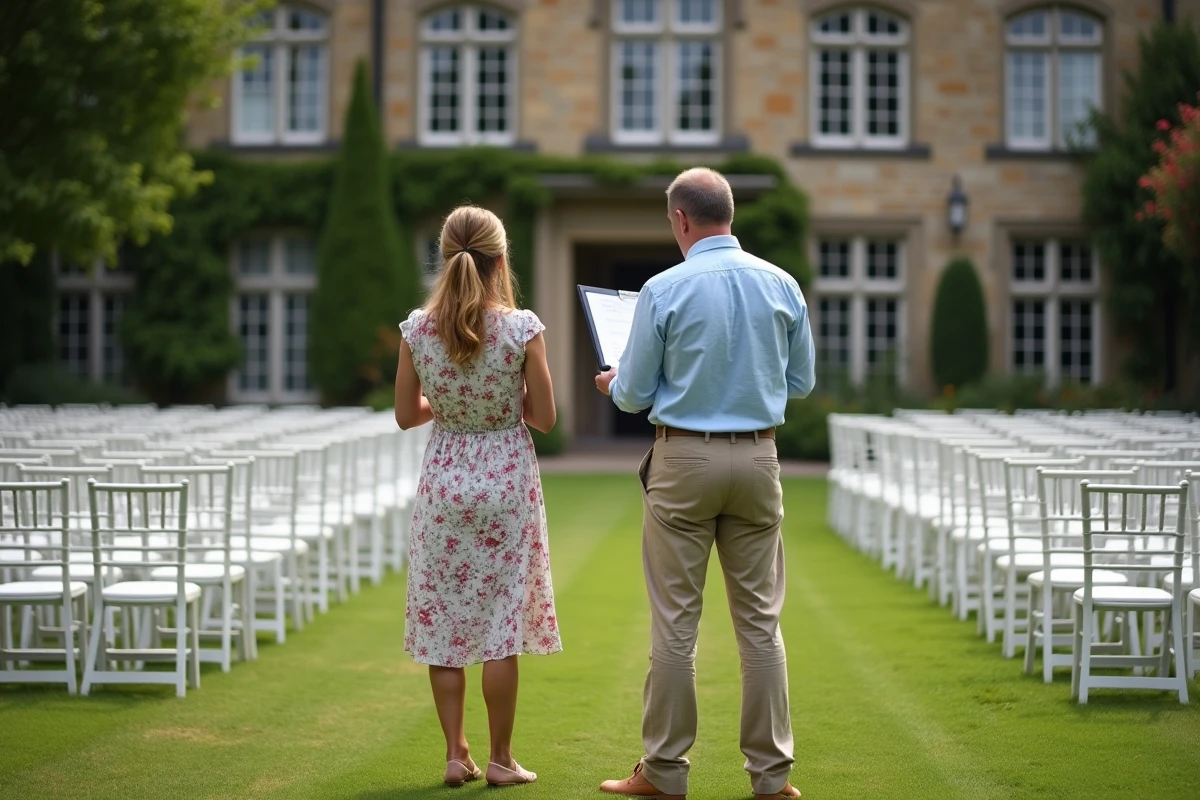
The venue weighs heavily on the budget and dictates almost everything else: mandatory or flexible catering, on-site accommodation, accessibility for guests. Starting from a realistic guest list, not an optimistic estimate, prevents paying for oversized space.
For a couple constrained by budget, a smaller venue with fewer guests costs less on every item: meals, drinks, decoration, furniture. Reducing the list by twenty people can free up the equivalent of the photographer’s budget.
4. Negotiate bundled packages with local vendors

Many vendors, especially caterers and florists, offer discounted rates when combining multiple services. A caterer who also provides the wedding cake, or a florist who handles bouquets and venue decoration, reduces travel and coordination costs.
Always request a bundled quote before separating items to have a concrete point of comparison. The price difference often justifies concentrating two or three services with the same professional.
5. Define a coherent decoration style to avoid scattered purchases

Without a guiding thread, decoration becomes a bottomless pit: impulsive purchases, mismatched elements, returns to the store. Setting a style (rustic, minimalist, bohemian, industrial) and sticking to it concentrates spending on compatible elements.
A shared inspiration board between the two partners limits disagreements and duplicates. Three colors maximum and one dominant material are enough to create a readable atmosphere without multiplying purchases.
6. Delegate day-of coordination to a single person

On the wedding day, the couple should not manage any logistics. Entrusting coordination to a wedding planner, even just for the day, or to an organized friend, radically changes the stress level.
This person centralizes schedules, manages vendor delays, and makes minor decisions without involving the couple. If the budget does not allow for a professional, a reliable friend equipped with a detailed schedule and contacts for each vendor can fulfill this role.
7. Prepare a realistic seating plan by considering affinities

The seating plan generates more tension than the menu choice. Grouping guests by affinities rather than family obligation fosters a relaxed atmosphere during the reception.
- Place people who don’t know anyone next to sociable guests, not between two closed groups
- Separate ex-partners or conflicting family members by at least two tables
- Provide a “mixed” table for solo guests, with a good view of the dance floor
8. Anticipate photo questions with a precise brief for the photographer

The most common regrets after a wedding concern missing photos: a grandparent absent from the group, a moment of the ceremony not captured. Writing a list of priority shots before the big day addresses this issue.
Providing the photographer with a list of people and moments not to miss takes twenty minutes and avoids months of frustration. Also specifying the moments when you do not want to be disturbed (meals, speeches) allows the photographer to work discreetly.
9. Prepare a weather backup plan even for an indoor wedding

The weather is not only a concern for outdoor weddings. A storm can block access to a parking lot, delay guests, or make a garden planned for the cocktail reception unusable. Identifying a fallback solution for each outdoor moment eliminates last-minute panic.
Also checking the venue’s electrical capacity in case of bad weather (heating, additional lighting) is part of the details that few couples anticipate.
10. Protect downtime without organization in the weeks leading up to the celebration

The final stretch concentrates follow-ups, confirmations, and adjustments. Without a break, fatigue turns every detail into a source of conflict. Blocking at least one entire weekend without any wedding-related tasks in the month leading up to it restores the couple’s energy for the big day.
This protected time is not a luxury: it allows you to arrive at the day eager to experience it rather than relieved that it is finally here.
Planning a stress-free wedding relies less on the size of the budget than on the clarity of choices made early. A rigorous reverse timeline, a venue tailored to the right number of guests, and delegated coordination on the big day cover most sources of tension. The rest is the celebration.